2026-11-05 ·
How to Choose Mold-Resistant Materials for Bathroom Remodels in McAllen
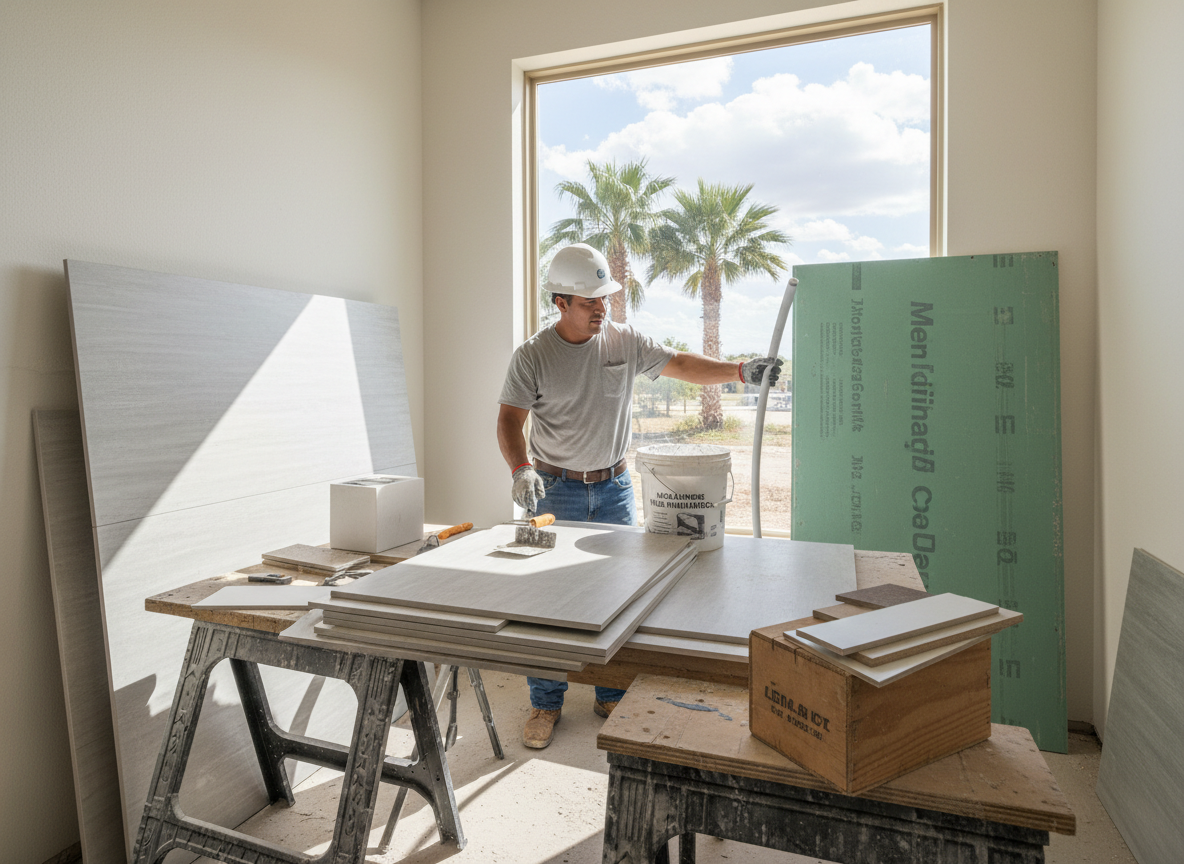
In McAllen's subtropical climate with high summer humidity, start bathroom remodels by using 1/2-inch moisture-resistant drywall on walls, cement board under tile, and epoxy grout in all wet zones to limit mold growth from condensation and steam. These choices directly address the moisture load from daily showers in Hidalgo County homes where mild winters keep indoor humidity elevated year-round. Older housing stock in Downtown McAllen and North McAllen often lacks modern ventilation, so material selection becomes the primary defense against mildew on ceilings and behind vanities.
Humidity Patterns in Hidalgo County Homes
McAllen's location in the Rio Grande Valley brings consistent 70-80 percent relative humidity from spring through fall, with temperatures frequently above 95 degrees near the McAllen Convention Center and Quinta Mazatlan. This climate keeps bathroom surfaces damp longer after use, especially in South McAllen ranch-style homes built before 1990 that have smaller original baths. Homeowners in nearby Edinburg and Pharr face the same issue because the flat terrain and proximity to irrigation canals add ground moisture that seeps into slab foundations. Standard paper-faced drywall absorbs this moisture quickly, leading to black mold within two to three seasons. Switching to moisture-resistant boards and cementitious backers stops wicking at the source. Proper material choices also reduce the need for frequent repairs when summer heat forces more indoor showering.
Backer Boards and Drywall Selection
Cement board remains the standard under tile because it does not swell when wet and provides a stable base for 12-by-24-inch porcelain tiles common in McAllen remodels. Install 1/2-inch cement board on tub surrounds and shower walls, then tape seams with alkali-resistant mesh tape and thinset. On non-tile walls, use 1/2-inch mold-resistant drywall rated for high-humidity areas rather than standard sheets. In Mission and Pharr homes with limited attic space, this upgrade prevents ceiling stains from steam that rises and condenses. Avoid green board in direct wet zones; it still contains paper that can support mold once saturated. These backer decisions add roughly $2–$3 per square foot but extend the life of the finished surfaces by 10–15 years in local conditions.
Tile, Grout, and Flooring Choices
Porcelain tile with less than 0.5 percent water absorption works best on McAllen floors because it resists warping from the mild winter temperature swings. Pair it with 100-percent epoxy grout that cures to a non-porous surface and blocks moisture penetration between tiles. Standard cement grout requires sealer every 8–12 months, which fails quickly in humid Hidalgo County bathrooms. For shower floors, use 2-by-2-inch mosaic tile set on a pre-sloped pan to move water to the drain within seconds. Vinyl plank rated for wet areas offers an alternative in homes near the McAllen Public Library where owners want wood-look flooring without the risk of cupping. Tile installation crews in the area routinely recommend these combinations after seeing repeated failures with cheaper grout in South McAllen remodels.
Ventilation, Sealing, and Long-Term Performance
Even the best materials need airflow. Install a 110-CFM exhaust fan vented directly outside rather than into attics common in North McAllen homes. Run the fan 20 minutes after showers and use a humidity-sensing switch set to 60 percent. Seal all penetrations around pipes and outlets with silicone caulk labeled for mold resistance. These steps complement material choices when scheduling work around McAllen's summer heat. For cost planning details, review what affects bathroom remodeling costs in Hidalgo County homes. In shower remodeling projects, combining cement board, epoxy grout, and proper venting has kept surfaces mold-free for over a decade in local homes. Bathroom remodeling that follows these steps delivers durable results without repeated mold remediation calls.